Reassembling the Arctic
Arctida Analyzes 15 Major Infrastructure Projects in the Russian Arctic: Who Benefits, and at What Cost?
In the Russian Arctic, even privately controlled industrial projects depend heavily on state support, while the impacts of large-scale construction extend far beyond individual facilities, affecting areas where Indigenous Peoples engage in traditional land and resource use. These are among the findings of a new Arctida study, in which we analyzed 15 major projects across different sectors as an interconnected system of infrastructure, capital, and logistics chains. The study helps explain how industrial activity in the region is organized.
About the Research
The Russian state and businesses are undertaking large-scale infrastructure projects that are reshaping the Arctic. Extractive projects depend on ports, roads, energy infrastructure, and specialized vessels, while transportation infrastructure is built in anticipation of future cargo volumes from resource companies. Assessing Arctic “development” therefore requires looking beyond the formal boundaries of any single resource deposit, terminal, or investment project.
The report examines 15 major infrastructure projects across the Russian Arctic, spanning LNG and oil production, mining and processing complexes, the Northern Sea Route, rail transportation, nuclear power generation, and ship repair.
We also consider climate and environmental changes as a cross-cutting factor that increases pressure on Arctic ecosystems and risks to industrial infrastructure.
Our analysis of impacts on Indigenous Peoples covers land use, traditional livelihoods, potential and documented project impacts, affected communities' participation in decision-making, and available mechanisms for compensation and benefit-sharing. We consider Indigenous Peoples both as project stakeholders and as holders of collective rights.
The research draws primarily on publicly available sources, including government documents and registers, corporate reports and project documentation, environmental impact assessment (EIA) materials, records of public consultations, investment presentations, and public statements by project participants.

Key Findings: Examples from the Projects
Our monitoring revealed a disconnect between how projects are structured and how the territories in which they operate function. Project documentation divides land into licensed areas, industrial sites, and operators' areas of responsibility. Traditional land and resource use within and around licensed areas, however, depends on the connectivity of pastures, rivers, marine waters, and seasonal routes. The impacts of roads, ports, energy infrastructure, and shipping can extend far beyond the main project site. In areas with a long history of industrial development, pressures from multiple projects combine to produce cumulative impacts.
Yamal LNG provides a clear example of these impacts. Project documents record the use of the area by nomadic reindeer herders, seasonal routes crossing the licensed area, the risk of reindeer being displaced onto adjacent pastureland, noise and light pollution, and possible impacts on fish populations. Roads, utility connections, Port Sabetta, and year-round maritime logistics must also be considered.

At the same time, Indigenous Peoples' visibility in law and project documentation depends heavily on existing territorial designations and whether the law and project documents recognize them as a group affected by the project. For example, Murmansk Oblast, home to Port Lavna, Polar Lithium, and the Kola Nuclear Power Plant, has no designated territories of traditional nature use (TTNUs). The project documentation we reviewed does not identify the Saami as a distinct affected group.
Importantly, potential, indirect, and cumulative impacts on adjacent areas are documented and assessed far less thoroughly than harm within licensed areas.
A similar blurring of boundaries emerges in the economics of Arctic projects. The formal distinction between state-owned and private initiatives fails to capture the true extent of state involvement.
The state acts as an owner and commissioning authority, provides financing and tax benefits, builds supporting infrastructure, and supports projects when external conditions change.
For example, Novatek controls Yamal LNG, but its development involved investments from foreign shareholders, loans from Russian and Chinese banks, financing from Russia's National Wealth Fund, and budget-funded construction of some supporting infrastructure. Port Lavna went through several changes of private ownership, while its rail connections and much of the terminal's financing model depend on state-owned companies and public funding.

Outcomes nevertheless vary considerably: alongside operating commercial enterprises, the Arctic is home to projects with years of delays, severalfold increases in estimated costs, or unused capacity. One example is the Northern Latitudinal Railway, a major transportation project. Plans initially called for commissioning in 2019, then in 2023, and later between 2027 and 2031. The concession project was put on hold in late 2025. Meanwhile, its estimated cost rose from 122 billion rubles in an early version of the project to more than 800 billion rubles in later estimates.
After 2022, sanctions brought the technological and logistical dependencies underlying Russia's model of Arctic “development” into sharper focus. Projects reliant on imported equipment, foreign capital, specialized ice-class vessels, and international markets have proved particularly vulnerable.
Arctic LNG 2 is perhaps the clearest example of sanctions directly affecting production capacity that had already been built. Construction continued, including through the use of components imported in circumvention of restrictions. The project's first production train was commissioned on schedule, but sanctions disrupted its original export model.
Recommendations
The 15 projects examined in the report reveal the Arctic as an interconnected system of infrastructure, capital, and logistics chains whose impacts cannot be assessed solely at the level of an individual operator. Assessing the economic resilience of this system, its environmental and climate risks, and the situation facing Indigenous Peoples therefore requires looking at each project's entire supporting infrastructure network, the accumulated pressures on affected territories, and how benefits and investments are distributed, who bears the risks and harm, and who has opportunities to influence decisions.
Russian oversight authorities should apply the same approach, assessing projects together with all their supporting infrastructure rather than artificially dividing assessments among individual facilities and legal entities. European and international institutions should likewise account for the interdependence of these projects and their cumulative and transboundary impacts in scenario modeling, strategic documents, and policies concerning the Russian Arctic.
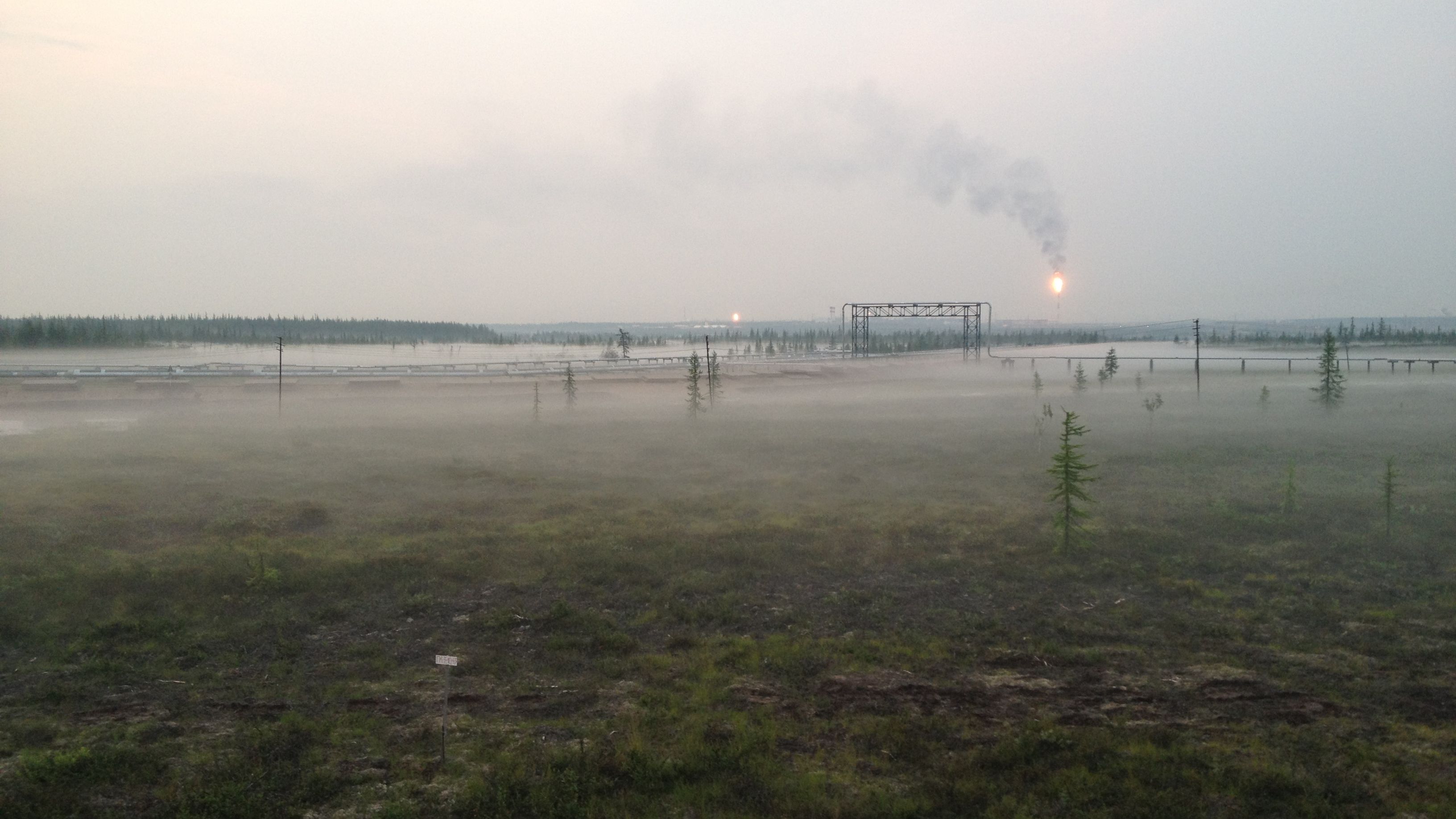
Cover photo by Pavel Gurenchuk / Wikimedia Commons
