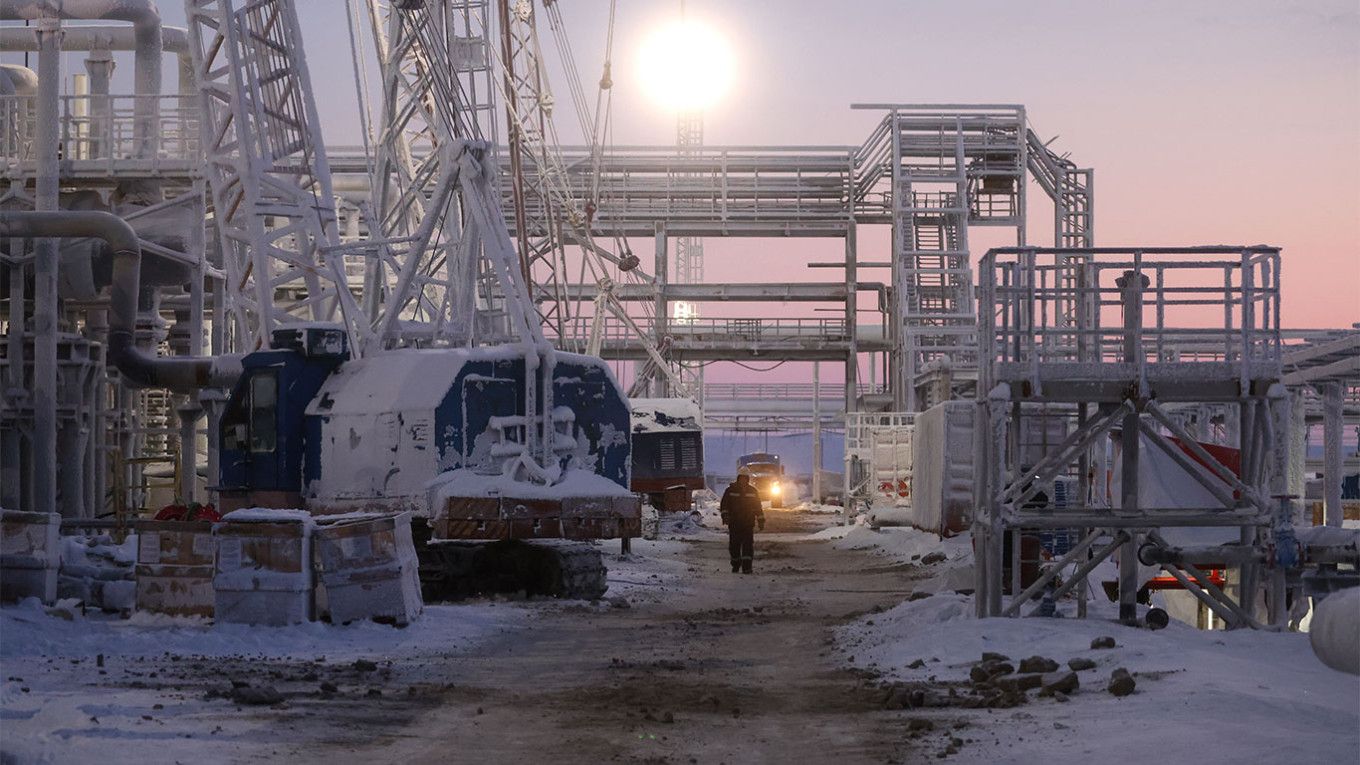
To the Arctic via the Emirates
How Timchenko and Mikhelson bypass sanctions to import Western LNG equipment
In November 2023, when the Arctic LNG-2 project—one of Novatek’s most ambitious efforts to solidify Russia’s presence in the Arctic—was hit by sweeping U.S. sanctions, it appeared to be a death blow. But just a few months later, Russia once again proved adept at finding creative detours for importing foreign technology. This time, the route runs through the United Arab Emirates, where Russian networks have taken root in murky business ecosystems.
Waterfall Engineering: From a Trickle to a Torrent
One of the key intermediaries for circumventing U.S. sanctions against Arctic LNG-2 has been an obscure company: Waterfall Engineering Ltd. Registered in the UAE in 2023, its volume of shipments to Russia surged rapidly. In the last quarter of 2023, the company exported €103.6 million worth of goods; by the following quarter (January–March 2024), that figure had more than tripled to €313.2 million.
This is hardly a case of organic business growth. Customs data reveals that Waterfall Engineering serves only one client: the Arctic LNG-2 project. The first recorded shipment—steel components for LNG production, storage, and export, manufactured by Baker Hughes and valued at €17,300—was made on October 16, 2023, just two weeks before U.S. sanctions formally blocked the project.
The company’s structure is a case study in sanctions evasion. Transactions are settled in euros to avoid triggering alerts from U.S. banks. Equipment is sourced via third countries, adding layers of opacity. But this kind of clever maneuvering comes with risk. The company’s rapid growth and exclusive focus on one client made it an easy target. In August 2024, Waterfall Engineering was added to the U.S. sanctions list—a clear signal that the game of international hide-and-seek can’t last forever.
Burying Ties to NIPIGAZ in the Emirates
A deeper look into Waterfall Engineering reveals it’s no random contractor—it is part of a deliberately constructed system tied to Arctic LNG-2.
Waterfall Engineering’s office is located in Abu Dhabi, sharing an address with the Dubai-based affiliate of French company GYDAN LNG SNC. GYDAN has effectively replaced the NovArctic consortium, which originally brought together Western contractors to work on Arctic LNG-2. After firms like Technip and Saipem exited due to sanctions, the only remaining player was NIPIGAZ, a Russian engineering and construction firm controlled by oligarch Gennady Timchenko.
Several other UAE-based companies—Nova Engineering & Construction Ltd and Smart Solutions Ltd—are tightly linked to NIPIGAZ, all operating out of the same Abu Dhabi address. The board of Smart Solutions Ltd included two Russian nationals:
- Egor Zubarev, a former Lukoil executive who led the company’s Middle East subsidiary (Lukoil Mid-East Ltd) from 2020 to 2022 before launching his own firm, Sirius One Consulting, according to his LinkedIn profile.
- Denis Mishchenko, who served as project lead for Arctic LNG-2 at NIPIGAZ from at least 2017 to 2020.
In 2023, Nova Engineering, closely aligned with Smart Solutions and NIPIGAZ, shipped €12.3 million worth of equipment to Arctic LNG-2.
Waterfall and Nova Engineering are like two sides of the same coin—creating the illusion of independence while executing a well-rehearsed sanctions workaround strategy.
NIPIGAZ: The Arctic Arm of Putin’s Inner Circle
At the heart of Arctic LNG-2 lies NIPIGAZ, the project’s primary engineering and construction contractor. The firm plays a crucial role at every phase of development—but its significance becomes even clearer when viewed through the lens of ownership and influence.
NIPIGAZ is ultimately controlled by two of Russia’s most powerful oligarchs—and close associates of Vladimir Putin:
- Gennady Timchenko, often referred to as “Putin’s wallet,” has been under U.S. and EU sanctions for years. His wealth and Kremlin ties go beyond business—they're instruments of geopolitical influence. Timchenko oversees key infrastructure projects in the natural gas sector, and his involvement in Arctic LNG-2 reflects the strategic value Moscow places on Arctic energy development.
- Leonid Mikhelson, CEO of Novatek, is not just a business titan but also Timchenko’s long-time ally. Together, they co-own shares in Arctic energy ventures, and their joint investments—such as the petrochemical giant SIBUR—form the backbone of Russia’s fossil fuel economy.
These two aren’t just oligarchs; they are strategic power players embedded in the Putin regime. Control over Arctic LNG-2 not only secures vast profits—it ensures their continued standing within Russia’s elite, where access and influence are critical for survival.
Sanctions are like a vast hunting ground, where predator and prey constantly switch roles. Through shell companies like Waterfall and Nova, Russia plays multi-layered chess—calculated, patient, and strategic.
The UAE’s Role: A Safe Harbor for Sanctions Dodging?
With every new revelation, it becomes increasingly clear: tightening sanctions is often a temporary fix. As long as countries like the United Arab Emirates remain willing to look the other way, Russia will continue to exploit the gaps.
Facing Western sanctions, the Arctic LNG-2 project spun up a network of affiliated shell companies tasked with delivering foreign equipment beyond the reach of U.S. or EU regulators. For now, Russia is leveraging agility and adaptability to keep its strategic ambitions alive. But pressure is mounting from the other side.
Who will ultimately win this cat-and-mouse game—the regulators, with their expanding sanctions web, or Russian companies, with their ever-adaptable logistics and legal gray zones? The answer could shape not just the future of Arctic LNG-2, but the entire architecture of global trade in the years ahead.
Cover photo by Stanislav Krasilnikov / TASS
