Vulnerability of Arctic LNG 2
Ice Constraints and Dependence on China
By mid-2026, the export logistics of Arctic LNG 2 had changed significantly. Amid sanctions and a shift in export markets, liquefied natural gas (LNG) exports from the Gydan Peninsula have encountered a number of operational constraints.
Arctida has analyzed vessel traffic data from the Northern Sea Route, technical characteristics of the Arctic fleet, and commercial delivery conditions for the Asia-Pacific market. The analysis reveals a discrepancy between the project’s original implementation plan and its actual operational status. The current operating model requires substantial adjustments to logistics chains and results in lower profitability.
Ice Navigation in Practice: Voyage of Aleksey Kosygin
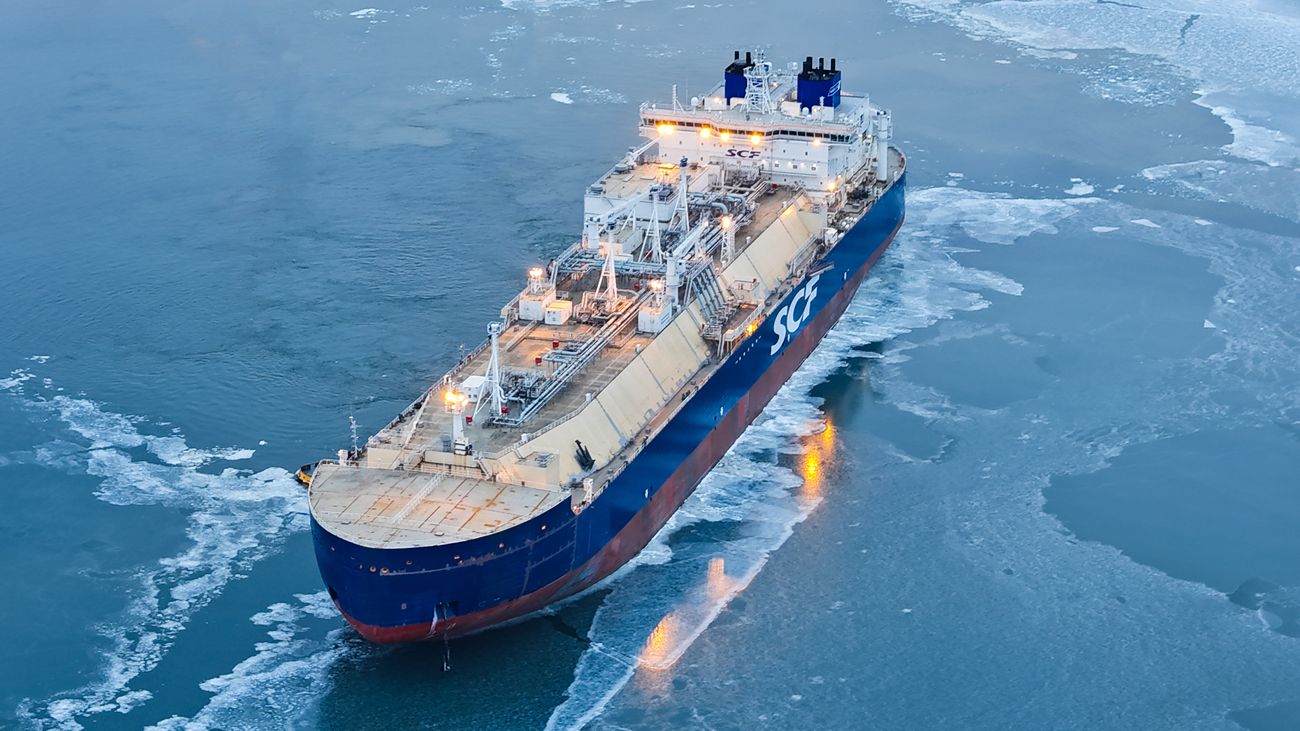
The export strategy of Novatek’s flagship Arctic LNG 2 project was originally built around a dedicated fleet of Yamalmax (SN 2366) LNG carriers. The lead vessel of the series, Aleksey Kosygin, was commissioned at the Zvezda shipbuilding complex in late December 2025.
According to the project documentation, the Arc7 ice-class vessel was designed to navigate independently through ice more than two meters thick. Its double-acting design enables stern-first navigation in heavy ice conditions, while three fully rotating Azipod propulsion units with a combined output of 45 MW are intended to provide sufficient icebreaking capability without the assistance of icebreakers.
This capability is a cornerstone of the project’s strategy for year-round direct LNG exports to Asian markets.
However, Automatic Identification System (AIS) data from January 2026 indicate markedly different operational performance. During Aleksey Kosygin’s first commercial eastbound voyage, the vessel required continuous icebreaker support. On the morning of January 13, the LNG carrier stopped near the Saint Lawrence Bay Bay to await the nuclear icebreaker Arktika, rather than attempting an independent transit through the Bering Strait despite ice conditions classified as “predominantly light.”
Later, upon approaching the Ayon ice massif in the East Siberian Sea, the vessel encountered dense multi-year ice and was unable to continue independently. The remainder of the passage was conducted in convoy formation, with the LNG carrier following directly in the wake of the nuclear icebreaker. Thus, under winter navigation conditions, vessels of this class do not possess the level of operational autonomy originally claimed, making LNG exports dependent on icebreaker escort provided by Rosatom.
Pace of Ice-Class Fleet Construction
On June 18, 2026, the Zvezda Shipbuilding Complex delivered the second Arctic LNG carrier in the series, Konstantin Posyet. The vessel was completed and underwent sea trials more quickly than the lead ship. The accelerated construction was made possible by the use of Russian-made specialized “tanker plywood” produced by Segezha Group for the fabrication of LNG tank insulation panels, replacing technologies previously supplied by the French engineering company GTT.
Despite the delivery of the second vessel, by the summer of 2026 the project’s dedicated fleet consisted of only three LNG carriers: Christophe de Margerie, reassigned from the Yamal LNG project, Aleksey Kosygin and Konstantin Posyet. Three additional vessels — Pyotr Stolypin, Sergey Witte, and Viktor Chernomyrdin — remain on the slipways at various stages of completion. At the shipyard’s current production rate of approximately one vessel every six months, assembling a fleet of 15 carriers will require between five and seven years. Until then, the project will continue to operate under a severe shortage of specialized shipping capacity.
Changes in Transportation Model and Limitations of Conventional Shipping
After gas production reached approximately 14 million cubic meters per day in early 2026, while only three ice-class LNG carriers were available, the project's operators were forced to adopt a two-stage logistics model.
- The first stage is a shuttle service. Arc7 LNG carriers transport cargo from the Utrenny terminal to floating storage units (FSUs): Saam FSU in the Murmansk Region and Koryak FSU in Kamchatka. Ship-to-ship transfers typically take between 12 and 24 hours, after which the carriers return to the Gulf of Ob.
- The second stage handles deliveries from the transshipment hubs to end customers. This segment relies on conventional LNG carriers without ice reinforcement — including Pioneer, Asya Energy, Everest Energy, and Buran — which operate exclusively in open-water conditions.
The inability of conventional LNG carriers to operate along the Northern Sea Route during winter was demonstrated in December 2025. The LNG carrier Buran attempted to reach the Utrenny terminal as part of a convoy consisting of two nuclear icebreakers (50 Let Pobedy and Arktika) and two Arc7 tankers. After four unsuccessful attempts to enter the ice, the vessel abandoned the voyage because of the risk that converging ice would crush its hull.
The incident demonstrated that even powerful icebreaker escort cannot compensate for the absence of an ice-class hull on the escorted vessel.
As a result, winter shipments from the plant are constrained by the carrying capacity of the three shuttle carriers, limiting exports to only 20–30% of the first production train's designed capacity.
The scale of vessel traffic along the Northern Sea Route can be explored using Arctida's interactive map:
An interactive map tracking vessel traffic in the Northern Sea Route
The China Vector: Infrastructure and Commercial Terms
Under the current international sanctions regime, China has become the primary export market for LNG produced on the Gydan Peninsula. Commercial deliveries via floating storage units have been reaching Chinese customers since August 2025.
The principal import hub for these volumes is the Beihai LNG terminal in Guangxi Province, operated by the Chinese state-owned company PipeChina. By the summer of 2026, the terminal had received 41 cargoes totaling approximately 2.6 million tonnes of LNG produced by Arctic LNG 2. At the same time, PipeChina is preparing to commission the Longkou Nanshan LNG terminal in Shandong Province, with a planned annual capacity of five million tonnes. Its location will shorten the shipping distance for cargoes delivered from the Koryak FSU transshipment facility off the coast of Kamchatka.
At the same time, the project’s commercial terms have changed substantially. Because of the risk of secondary sanctions against importing companies, the supplier offers Chinese buyers discounts of between 30% and 40% on LNG cargoes. The need to maintain a complex logistics chain involving transshipment through floating storage units, combined with substantial discounts granted to its only major customer, significantly increases transaction costs and directly reduces the profitability of Novatek's operations under the Arctic LNG 2 project.
Cover photo by Zvezda Shipbuilding Complex
